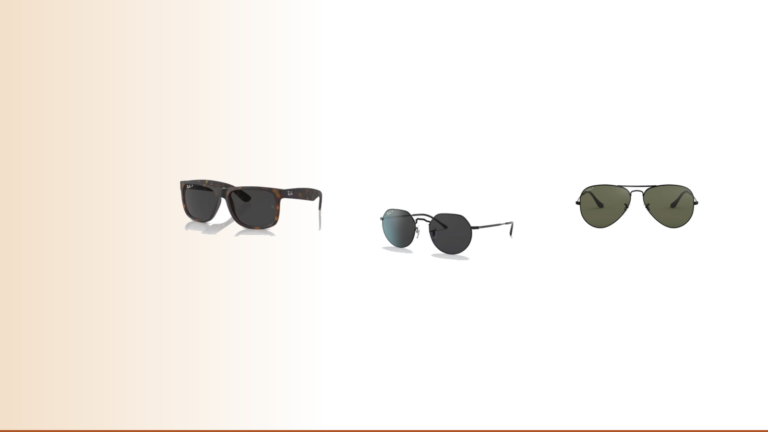
Every Ray-Ban carries its own specification, printed on the frame. Once you can read it, you can order the right size online without trying anything on, and you can check that a listing matches the pair it claims to be.
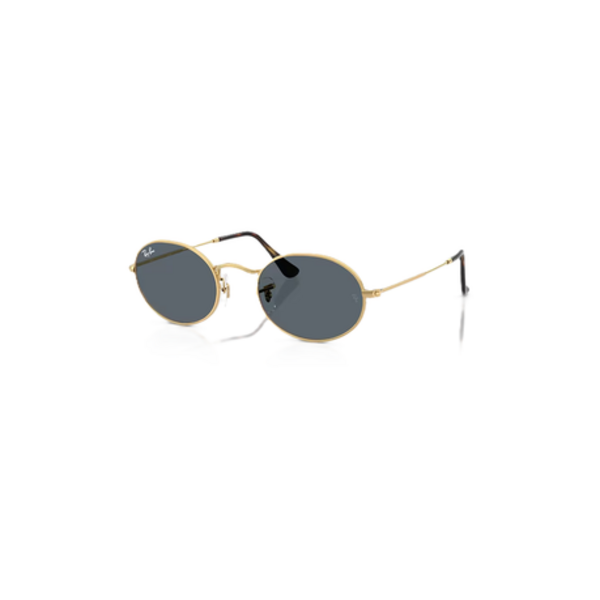
Take one of the pairs we stock, the gold Round Metal. Its code reads RB3447 001 50□21 3N, and the rest of this guide takes it apart.
Where Ray-Ban prints the code
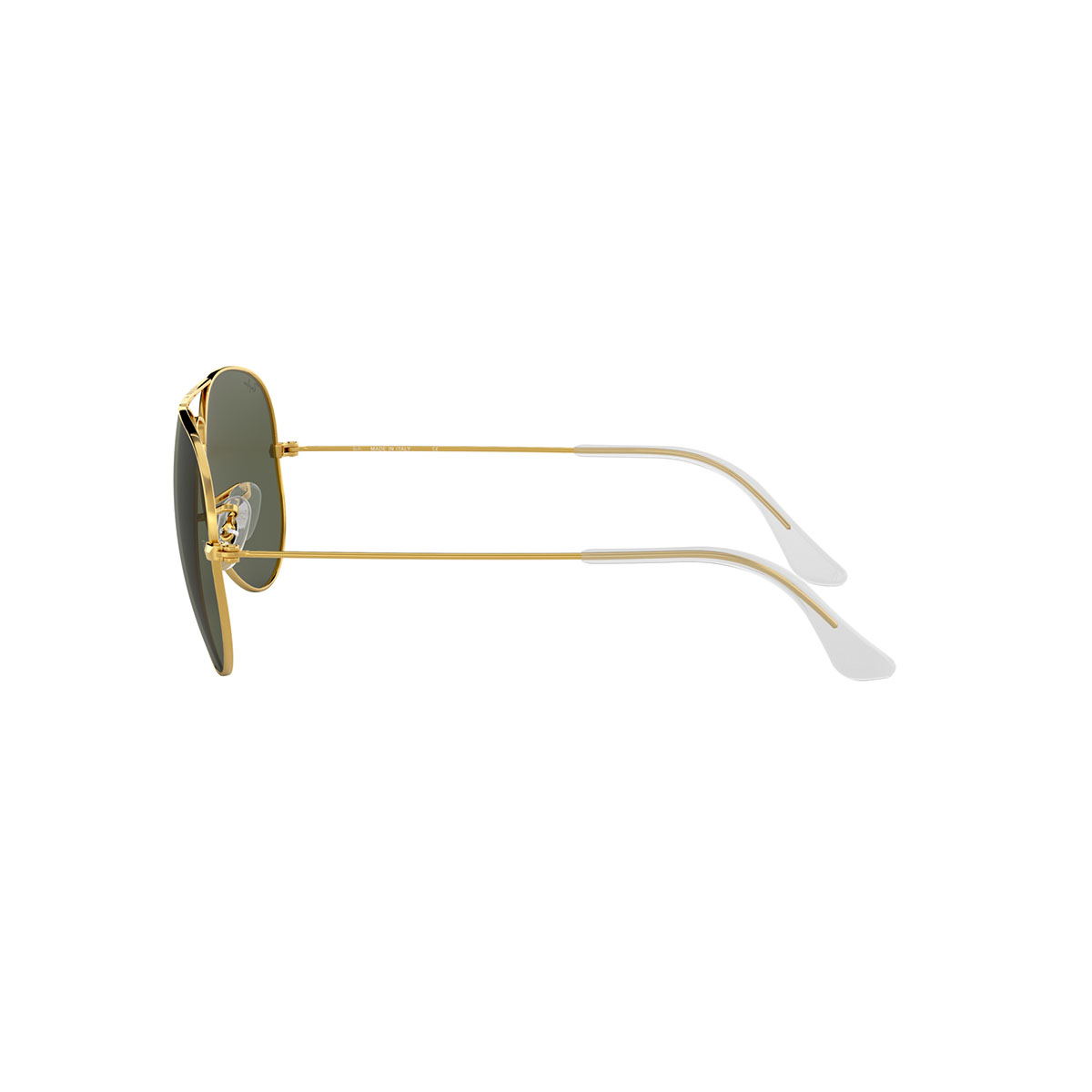
Open the arms and look along the inside of both. Depending on the model, you will find the model code, the colour code, the size and a lens mark, often split between the two arms. The print is small and can wear off on an older pair, so good light helps.
Our listings use the same codes in the product name. The gold Round Metal above is listed as Ray-Ban RB3447 Round Metal 001 50 21 3N, so you can match a pair you own against our range letter for letter.
Reading it, part by part
- RB3447 is the model. Every Ray-Ban sunglass model starts with RB, and the number identifies the shape: RB3025 is the Aviator, RB3447 the Round Metal, RB4105 the Folding Wayfarer.
- 001 is the colour code, which covers the frame and lens combination. On the RB3447, 001 is gold.
- 50 is the lens width in millimetres, measured across one lens at its widest point.
- □ means the size was measured with the boxing system, the industry standard for frame sizes.
- 21 is the bridge width in millimetres, the gap between the lenses where the frame sits on your nose.
- 3N is the lens mark. The number is the lens category, from 0 for very light to 4 for very dark, and the letter says whether the lens is sunglasses/polarized/" class="autolink">polarised: N for not polarised, P for polarised.
- Temple length, where a model prints it, is a third figure such as 145: the length of the arm in millimetres, from the hinge to the tip.
Category 3 is the usual rating for sunglasses: dark enough for bright South African sun and fine for driving. Category 4 lenses are too dark for the road, which our guide to lens categories 0 to 4 explains.
What the slash in a colour code tells you
Some colour codes have two parts, such as 002/58. The first part describes the frame and the second the lens. On a Ray-Ban, /58 usually signals a polarised green lens: in our range the 002/58 and 004/58 Aviators and the 601/58 Folding Wayfarer are listed with polarised G-15 lenses, and the 002/58 Hexagonal is listed as polarised.
That makes the code a quick check on a listing. If a seller calls a pair polarised but the code and the lens mark do not agree, ask before you pay.
Using the numbers to choose a size
Start with a pair you already like. Find its lens width and bridge, or measure them if the print has worn off; our guide to measuring a frame at home shows how. Ray-Ban’s own size guide defines frame size the same way, as lens width followed by bridge width.
Lens width sets the overall width. A frame has two lenses, so a 3 mm step in lens width changes the total width by about 6 mm. Stay within 2 mm of the lens width that already fits you and the frame will sit close to where you expect.
Bridge width sets where the frame sits on your nose. A bridge that is too wide lets the frame slide down; one that is too narrow sits high and pinches. If you are between two sizes, choose the one whose bridge is closer to your current pair.
Lens height decides how much of your face the lens covers. It is not in the code, but many of our listings give it. A deep lens can rest on the cheeks of a shorter face, and a shallow one leaves a gap above the brow on a longer face.
Sizes of the Ray-Bans we stock
These measurements come from our listings. The sizes column shows the lens widths we had in stock when we wrote this.
| Model | Sizes | Bridge | Temple | Lens height |
|---|---|---|---|---|
| Aviator RB3025 | 58 | 14 | 135 | 50.1 |
| Round Metal RB3447 | 50 | 21 | 145 | 46.9 |
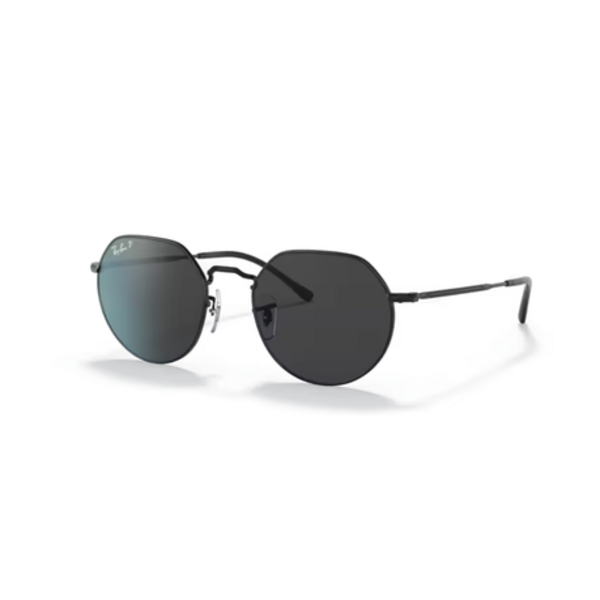
| Hexagonal RB3548N | 51 | 21 | 145 | 44.7 |
| Jack RB3565 | 51, 53 | 20 (size 51) | 145 | 45 (size 51) |
| Folding Wayfarer RB4105 | 50, 54 | 22 (size 50) | 140 | 42 (size 50) |
Two pairs can share a lens width and still fit differently. The Aviator’s 50.1 mm lens is more than 5 mm deeper than the Hexagonal’s 44.7 mm, which is why the Aviator suits longer faces and the Hexagonal often suits shorter ones. Our Aviator guide covers the RB3025’s three sizes in detail.
Where we stock two sizes, the choice usually follows your current frame. The Jack RB3565 in 51 suits a pair you own with a lens width between 49 and 53, and the 53 suits one between 51 and 55.
When to ask us
If you are between two sizes and the listing does not settle it, send us the numbers from the inside of your current pair on WhatsApp, 074 669 3111, weekdays 08:00 to 17:00. We will compare them with the frame you are looking at before you order, which is quicker than a return.
How we’d choose
- You own a Ray-Ban that fits: order the same model code and size, and you are done.
- You own another brand that fits: match the lens width within 2 mm and the bridge within 1 to 2 mm.
- Nothing you own fits well: start with the standard size of the model, such as the 58 Aviator, and send us the numbers from your current frame so we can tell you which way to move.
- You are torn between two sizes: pick the one with the closer bridge, or ask us.
Everything we stock is on our Ray-Ban page, with the full code and measurements on each listing.
Frequently asked questions
What does 3N or 3P mean on Ray-Bans?
The number is the lens category, from 0 for very light to 4 for very dark, and the letter tells you whether the lens is polarised. N means not polarised and P means polarised, so 3P is a category 3 polarised lens.
Where are the size numbers on my Ray-Bans?
On the inside of the temple arms. Depending on the model, the model code, colour code, size and lens mark may be split between the two arms, and on an older pair the print can be faint.
What does the square between the numbers mean?
It shows the frame was measured with the boxing system, the standard method for sizing frames. The number before it is the lens width and the number after it is the bridge width, both in millimetres.