The gritty, aching, slightly unfocused feeling after a long day at a screen has a name: digital eye strain. It is extremely common, it is not doing lasting damage to your eyes, and the causes are more mundane than the marketing around it suggests.
You stop blinking
This is the largest single factor. A person at rest blinks something in the order of fifteen to twenty times a minute. Concentrating on a screen, that rate drops sharply, and the blinks that do happen are more often incomplete.
Blinking is what spreads the tear film across the surface of the eye. Blink less and the film breaks up, the surface dries in patches, and the result is exactly the gritty burning sensation people describe. Most of what is called digital eye strain is, mechanically, dry eye.
You hold one focus for hours
Focusing on something close requires the muscles inside your eye to hold a contraction. Doing that for an entire working day is a sustained muscular effort, and it produces the same dull ache any held contraction would.
Your eyes also have to converge, turning slightly inward to point at a near object. That is a second set of muscles, held in the same position for the same hours.
Everything else
- Screen too close or badly placed. A screen above eye level opens the eyes wider and dries them faster.
- Glare and reflections. A window behind you means squinting all day.
- An out-of-date prescription. Small uncorrected errors are unnoticeable in short bursts and exhausting over eight hours.
- Air conditioning. Moving dry air across the eyes accelerates tear evaporation.
What helps
- The 20-20-20 habit. Every twenty minutes, look at something roughly twenty feet away for twenty seconds. This releases both the focusing and the convergence effort. It is the single most effective thing on this list.
- Blink deliberately. Full, complete blinks. A few conscious ones when you notice dryness genuinely help.
- Put the screen below eye level. Top of the monitor at or just under eye height, roughly an arm’s length away. Looking slightly down narrows the eye opening and slows evaporation.
- Deal with the glare. Move the screen so windows are to the side rather than in front of or behind you.
- Have your eyes tested. If strain is persistent, an uncorrected prescription is a common and fixable cause.
And blue light glasses?
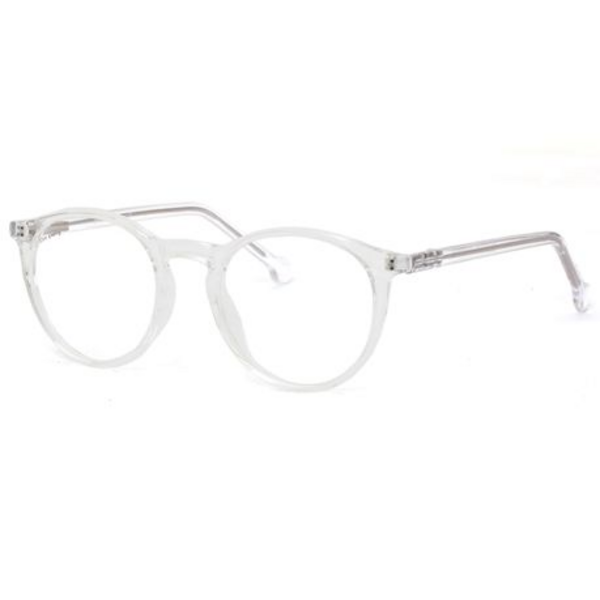
The honest answer is that the trials have not shown that filtering blue light measurably reduces eye strain. The mechanisms above are what the evidence points at, and they are all addressed by habit and setup rather than by a lens. Plenty of people report preferring to wear them, and that is a fair reason to own a pair. It is just not the reason usually advertised.
If symptoms persist despite changing your setup, that is a reason to see an optometrist rather than to buy a filter.