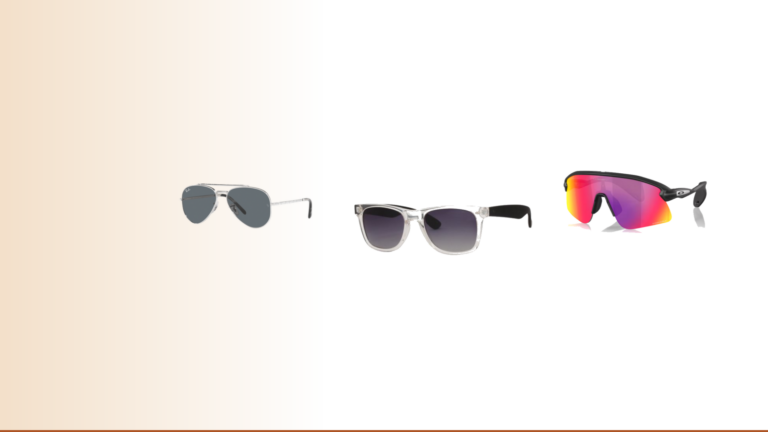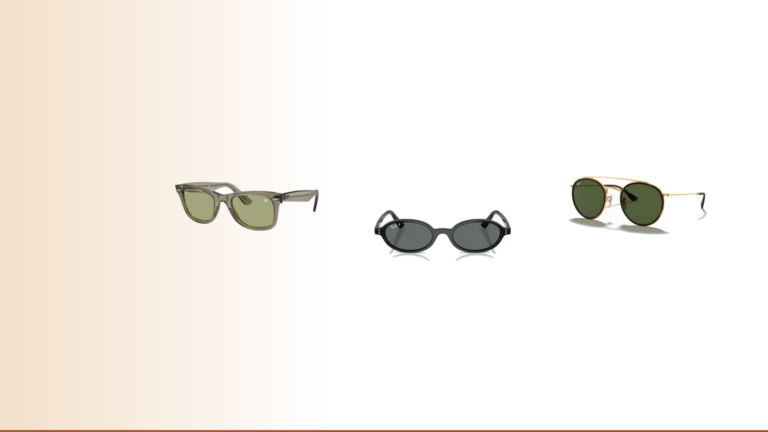
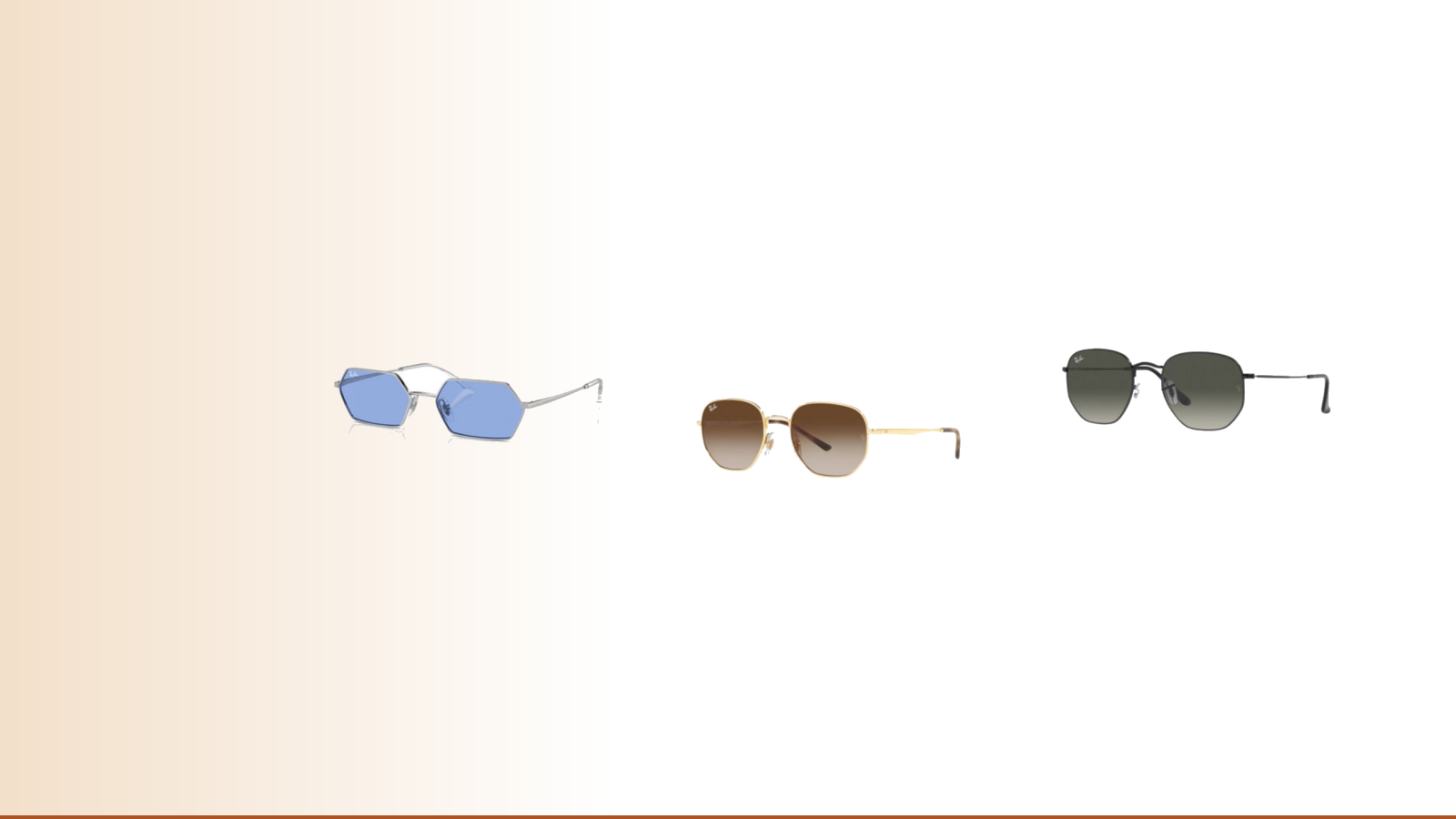
A handful of frame shapes have proved almost immune to fashion. Three in particular turn up decade after decade, and all three began as answers to practical problems rather than as style exercises.
The Aviator
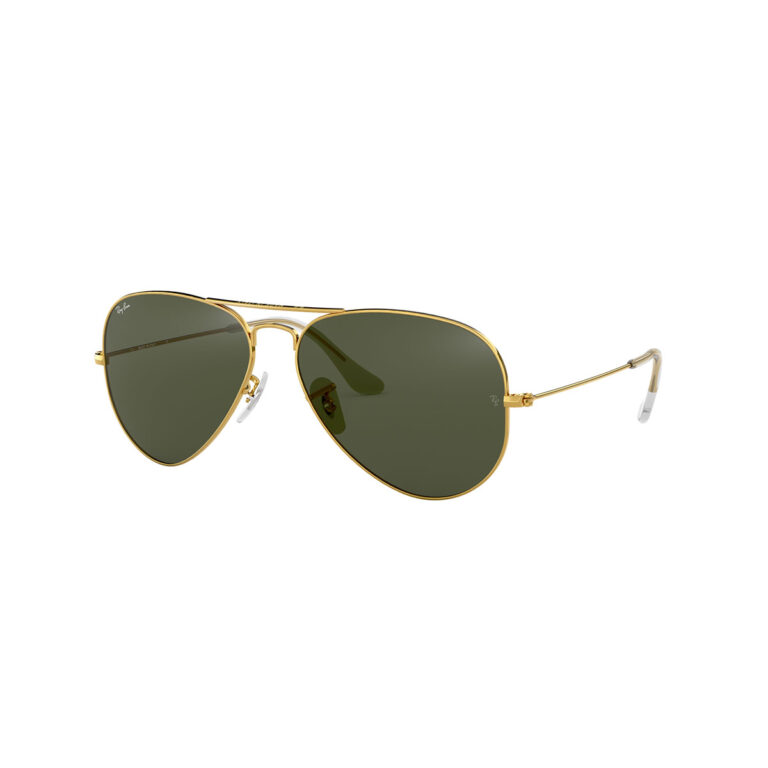
The aviator was designed for pilots. Flying at altitude in open and early enclosed cockpits meant intense glare and very bright light, and the brief was a lens that covered the whole eye socket, including the angles a pilot’s eyes travel to when scanning instruments and sky.
That is where the shape comes from. The teardrop is not a styling flourish: it is a lens deep enough to cover the eye when looking down, tapering where it does not need material. The thin metal frame kept the weight off the face under a headset, and the double bridge added rigidity to a wide, thin frame.
Ray-Ban’s association with the shape dates to the 1930s, and the name of the brand itself comes from the original purpose: to ban the glare.
The Wayfarer
The Wayfarer arrived in the early 1950s and represented a genuine break. Until then quality frames were largely metal, because that was the established manufacturing method. Moulded plastic was new, and it allowed shapes that metal could not produce: thick, angular, with a trapezoidal front and a strong brow line.
The result looked unlike anything before it, and it has since become the default idea of what sunglasses look like. Its long popularity owes something to how forgiving the shape is: the angled upper corners and squared lower edge flatter a wide range of faces, which is why it remains the safest recommendation for someone who does not know where to start.
The Clubmaster
The browline shape came out of the 1940s and 1950s, and it borrows its logic from spectacles rather than sunglasses. A heavy upper rim carries the brand and the structure, while the lower half of the lens is held by a thin wire or left rimless.
The reason it works is that the strong horizontal brow sits where your eyebrows already are, reinforcing a line the face already has. It reads as considered rather than sporty, which is why it has always been the more formal of the three.
Why they lasted
All three were designed around the face rather than around a season. Each solves a proportion problem: the aviator covers the eye socket completely, the Wayfarer balances a face with angles at the top and width at the bottom, and the Clubmaster works with the brow line instead of against it.
That is also the useful takeaway if you are choosing between them. They are not interchangeable. The aviator suits stronger, more angular faces because it curves inward at the base; the Wayfarer suits rounder faces because it supplies corners; and the Clubmaster suits anyone who wants the frame to sit with the brow rather than dominate the face.