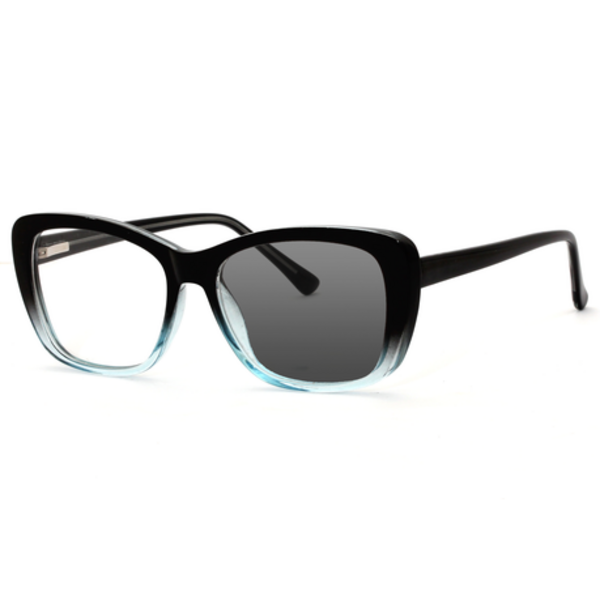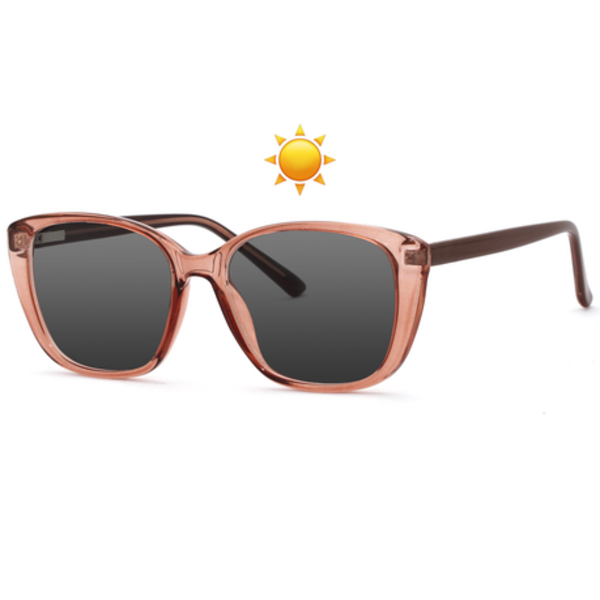
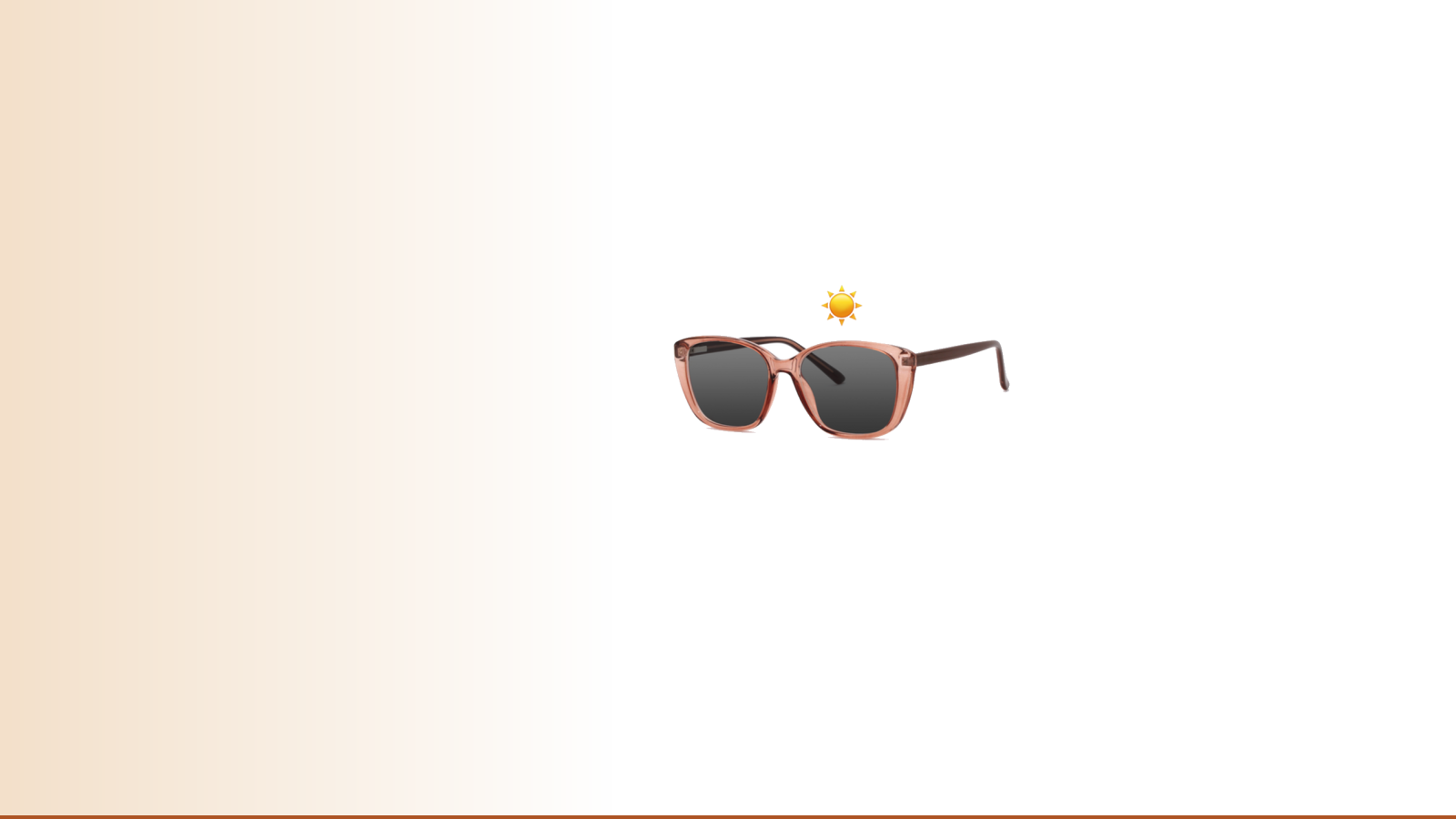
Photochromic lenses darken in sunlight and clear again indoors, which makes a single pair do the work of two. They are a good answer to the specific irritation of carrying prescription glasses and sunglasses around all day. They also have two quirks that surprise people, and both are easier to accept if you know about them first.
How they work
The lens contains molecules that change shape when they absorb ultraviolet light. In that changed state they absorb visible light, which is what you see as the lens going dark. Remove the ultraviolet and they revert, and the lens clears.
The key detail, and the source of both quirks, is that the trigger is ultraviolet rather than brightness. The lens is not responding to how bright the scene looks to you. It is responding to how much ultraviolet is landing on it.
Quirk one: they underperform in a car
Most modern windscreens are laminated, and that lamination filters a large share of ultraviolet. That is good for your skin and good for the car interior, and it means the ultraviolet your photochromic lenses need is largely being removed before it reaches them.
The result is that lenses which go properly dark on a pavement may sit at a light tint behind the wheel, in exactly the glare you wanted them for. If your main reason for wanting them is driving, this is the thing to know: a dedicated pair of sunglasses does that job better. Some manufacturers make versions specifically tuned to activate behind glass, so it is worth asking rather than assuming.
Quirk two: temperature changes the result
The reaction is temperature-sensitive. In cooler conditions the molecules revert more slowly, so the lenses go darker and stay dark longer. In real heat they reach a lighter maximum tint and clear faster.
For much of South Africa that means the lenses are at their least dark on precisely the hottest, brightest days, and noticeably darker on a crisp Highveld winter morning. It is not a fault. It is chemistry, and every photochromic lens on the market behaves this way to some degree.
Speed
Darkening is fast, usually most of the way within about a minute. Clearing is slower, often several minutes to go fully clear. Walking indoors from bright sun means a short period of looking slightly shaded. Most people stop noticing within a week.
Who they suit
- Good fit: you move in and out of buildings all day, you dislike carrying a second pair, and you want ultraviolet protection without thinking about it.
- Poor fit: your main need is driving glare, you want a consistent tint for photography or sport, or you want the darkest possible lens on the hottest possible day.
One thing that does not change
Photochromic lenses generally filter ultraviolet fully in both their clear and their dark state, because the ultraviolet filtering is a property of the lens rather than of the tint. The lens looking clear indoors does not mean it has stopped protecting you outdoors.